For sharp morning heel pain from plantar fasciitis, a small massage ball usually beats a foam roller because it concentrates pressure on the exact knot in your arch — but the best 2026 setup uses both. In the foam roller vs massage ball plantar fasciitis debate, the ball wins for trigger-point release on the plantar fascia itself, while a foam roller targets the calves and Achilles — the upstream tissues that pull on your heel every night you sleep. This guide breaks down which tool to use when, the 5-minute routine that loosens fascia before your first step out of bed, and the picks worth keeping next to your nightstand.
Why plantar fasciitis hurts worst the moment you get out of bed
Plantar fasciitis is inflammation and micro-tearing of the thick band of tissue that runs from your heel bone to the ball of your foot. Overnight, your foot sits in a relaxed plantarflexed position (toes pointed slightly down), which lets the plantar fascia contract and your calves shorten. When you stand up and load that cold, tight tissue, the fascia re-tears at the heel attachment — that is the stabbing pain you feel in the first 10 steps.
The fix is not just attacking the heel. The plantar fascia is biomechanically continuous with the Achilles tendon and the calf complex — tight gastrocnemius and soleus muscles tug on the heel and load the fascia around the clock. That is why a complete recovery routine has to address both the foot itself and the lower leg. One tool cannot do both jobs equally well, which is exactly why the foam roller vs massage ball plantar fasciitis question keeps coming up.
What a massage ball does that a foam roller cannot
A massage ball — whether it is a dedicated trigger-point ball, a lacrosse ball, or even a frozen golf ball — applies concentrated pressure to a small area. For plantar fasciitis, that is exactly what the inflamed band needs. Sit in a chair, place the ball under your arch, and roll slowly from heel to the ball of the foot for 60-90 seconds per side. Frozen, it doubles as cryotherapy and shuts down acute pain fast.
The key variable is contact area. The plantar fascia is roughly 1.5 inches wide. A standard foam roller spreads pressure across 6 inches or more of contact, so it cannot dig into the specific painful spot. A ball can.
What a foam roller does that a massage ball cannot
A foam roller wins on the calves. The gastrocnemius and soleus are large muscles, and they need broad pressure plus body weight to release. Sitting with one calf on a roller and rocking from knee to ankle for 60 seconds per side is the single most-overlooked plantar fasciitis intervention. Add the peroneals (outside of the shin) and the tibialis posterior, and you have drained the upstream tension feeding your heel pain.
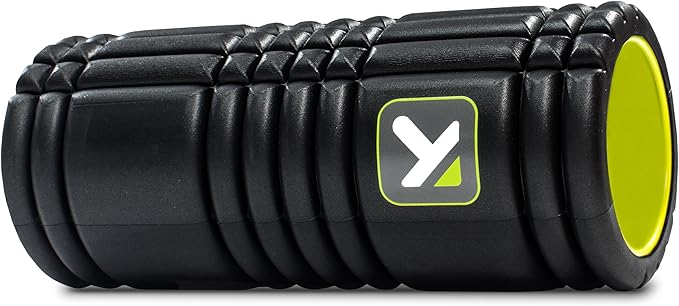
A textured roller — the kind with ridges or nodules — mimics a massage therapist's thumbs and gets deeper into the soleus, which sits beneath the gastrocnemius and is harder to reach with hands alone. This is where products like the TriggerPoint Grid earn their reputation.
Foam roller vs massage ball for plantar fasciitis: side-by-side
| Factor | Massage Ball | Foam Roller |
|---|---|---|
| Best for | Direct plantar fascia release, arch knots | Calf, Achilles, soleus release |
| Pressure type | Pinpoint, deep | Broad, sustained |
| Morning first-step pain | Excellent (frozen) | Indirect (loosens upstream tissue) |
| Long-term prevention | Good | Excellent |
| Portability | Fits in a desk drawer | Stays at home |
| Learning curve | None | About 5 minutes |
| Typical 2026 cost | $8-25 | $20-90 |
The honest answer to the foam roller vs massage ball plantar fasciitis question is "both, in sequence." The ball goes under your arch the second you wake up. The roller goes under your calves later in the day. Skipping either one slows recovery and is why so many people plateau after a week of progress.
Best foam rollers for plantar fasciitis recovery in 2026
Below are the rollers that actually move the needle for plantar fasciitis sufferers. The criteria: enough density to release the soleus, a length that lets you work the full calf, and durability so they do not compress flat after a month of use.
TriggerPoint Grid 1.0 — Best Overall for Calf Release
The 13-inch TriggerPoint Grid 1.0 is the roller most physical therapists hand to plantar fasciitis patients. The multi-density EVA foam over a hollow core stays firm for years, and the grid pattern (raised squares, "fingertip" channels, flat zones) lets you dial pressure from light to brutal by changing your contact point. For the soleus — the muscle most often missed in plantar fasciitis routines — the firmer ridges dig in where a smooth roller would skate over. Check the TriggerPoint Grid 1.0 on Amazon.
FITINDEX Vibrating Foam Roller — Best for Acute Inflammation
Vibration adds a neuromuscular component that static rolling cannot replicate. The 5-speed FITINDEX Vibrating Foam Roller is FSA/HSA eligible, which means plantar fasciitis recovery is a qualified medical expense in 2026 and you can effectively knock 20-30% off the price using pre-tax dollars. The lowest setting is gentle enough for sensitive, inflamed calves; the highest is genuinely intense and good for chronic, stubborn soleus tightness that will not yield to static rolling. Battery lasts about two hours of use, so a full week of morning routines on one charge is realistic. Check the FITINDEX Vibrating Roller on Amazon.
Krightlink 5-in-1 Foam Roller Set — Best Combo Pick
This is the answer if you want the foam roller and the massage ball in one purchase. The Krightlink 5-in-1 set includes a hollow textured roller, a smooth solid roller, a peanut massage ball, a spiky trigger ball, and a resistance band — covering both sides of the foam roller vs massage ball plantar fasciitis question with a single shipment. The spiky ball is the one you will grab for the morning arch routine; the peanut sits perfectly under the Achilles tendon. Build quality will not match a single $50 specialty product, but as a starter kit it is hard to beat. Check the Krightlink 5-in-1 set on Amazon.
Amazon Basics High-Density Foam Roller (18") — Best Budget Pick
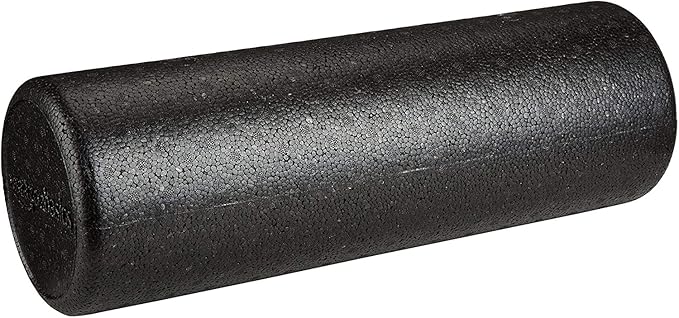
If you just need a workable roller and do not want to overthink it, the 18-inch Amazon Basics High-Density Foam Roller is dense enough to release calves without compressing, long enough to do both legs at once for IT-band work, and cheap enough to leave at the office. It is smooth (no grid texture), which actually makes it gentler for the first few weeks of recovery when an inflamed soleus cannot tolerate aggressive nodules. Check the Amazon Basics 18" Roller on Amazon.
Amazon Basics High-Density Round Foam Roller — Compact Alternative
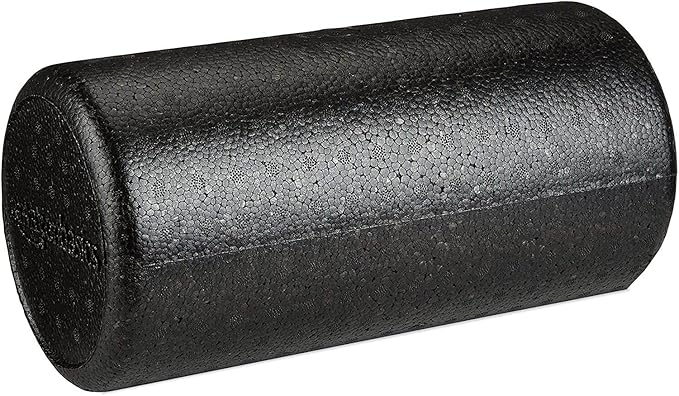
Same dense EPP foam as the 18-inch model in a shorter form factor that fits in a gym bag or carry-on. Worth considering if you travel often and do not want to leave your recovery routine at home — plantar fasciitis flares on travel days because of new shoes and long airport walks, so packability matters more than most reviews admit. Check the Amazon Basics Round Roller on Amazon.
The 5-minute morning routine that actually works
Do this before you put weight on your foot. Keep your tools next to the bed.
- Sit on the edge of the bed. Place a frozen massage ball (or a frozen water bottle as a substitute) under one arch.
- Roll 60 seconds per foot. Slow, deliberate, heel to the ball of the foot. Pause on tender spots for 10 seconds each.
- Towel calf stretch, 30 seconds per leg. Loop a towel around the ball of your foot and pull your toes toward your shin.
- Stand up slowly. Walk on carpet, not bare tile, for the first 30 seconds.
- Later in the day: 2 minutes per calf on the foam roller. Focus on the soleus (the lower third, near the Achilles).
Most users report a noticeable reduction in first-step pain within 7-10 days of consistent practice. If you are still in sharp pain after three weeks of routine plus appropriate footwear, see a podiatrist — fasciitis that does not respond to conservative care sometimes needs a night splint or shockwave therapy.
How to choose between the two if you can only buy one
If your pain is sharp and localized to the heel or arch, buy a massage ball (or a combo set like the Krightlink) first. If your pain is more diffuse, involves obvious calf tightness, or radiates up the back of the leg, start with a foam roller. If your budget allows both, the Krightlink 5-in-1 covers the whole spectrum for less than the cost of two single-purpose tools, and you can graduate to a dedicated TriggerPoint Grid when the starter set wears out.
For adjacent reading, see our guides on choosing the right foam roller density for tight calves, when vibration rolling outperforms static rolling, and the night-splint-vs-rolling comparison for stubborn cases.
Frequently Asked Questions
Can I use a tennis ball instead of a massage ball for plantar fasciitis?
Yes, in a pinch. A tennis ball is too soft for deep trigger-point work but it is better than nothing for early-stage or sensitive feet. A lacrosse ball is the classic upgrade — firmer, denser, and roughly the same size. A frozen golf ball is the most aggressive small-ball option and pulls double duty as cryotherapy for acute morning pain.
How long should I roll my foot for plantar fasciitis each day?
60-90 seconds per foot, two or three times a day. More is not better — over-rolling inflamed tissue can extend healing. The goal is to release tension and increase blood flow, not to grind through pain. If you are wincing above a 6 on a 1-10 scale, ease off the pressure or switch to a softer ball.
Should I foam roll my plantar fascia directly?
Generally no. A standard 6-inch foam roller is too wide to apply targeted pressure to the plantar fascia, and the angles are awkward. Use a ball for the foot and reserve the foam roller for calves, Achilles, and soleus. If your only tool is a roller, you can stand and roll the underside of your foot on it, but expect modest results compared to a ball.
Is a vibrating foam roller worth it for plantar fasciitis?
For acute and chronic cases, yes. Vibration adds a neural component that downregulates pain signaling and helps muscles release faster than static pressure alone. The FSA/HSA eligibility on tools like the FITINDEX also means you can pay with pre-tax dollars in 2026, which effectively reduces the price by 20-30%. For mild, intermittent fasciitis a standard non-vibrating roller is fine.
How soon will I feel relief from rolling for plantar fasciitis?
Immediate relief from the ice-ball routine is common — 5-15 minutes of reduced first-step pain after a frozen rollout. Durable relief (waking up without sharp pain) typically takes 2-4 weeks of consistent twice-daily practice combined with calf stretching and supportive footwear. Pure rolling without addressing footwear and load tends to plateau around week two.
Can I roll if my plantar fasciitis is in the acute, very painful stage?
Use a frozen massage ball with light pressure only. Skip the foam roller on the foot itself during a flare — you do not want to compound the inflammation. You can still roll your calves; in fact, releasing upstream tension during a flare often shortens recovery. If pressing on the heel makes the pain spike for hours afterward, stop and consult a clinician.
What is the difference between a smooth and textured foam roller for plantar fasciitis recovery?
Smooth rollers (like the Amazon Basics models) deliver even, broad pressure — gentler and better for the first weeks of recovery or for users new to rolling. Textured rollers (like the TriggerPoint Grid) have raised zones that mimic deep-tissue thumb pressure — better for chronic, stubborn calf tightness and the deep soleus. Most people graduate from smooth to textured as their tissue tolerance improves over a few weeks.
Key Takeaways
- Choosing the right foam roller vs massage ball plantar fasciitis means matching capacity and output ports to your actual devices
- Always check actual watt-hours (Wh), not just watts — runtime depends on Wh, not peak output
- Also covers: plantar fasciitis foam roller vs ball
- Also covers: morning heel pain ball or roller
- Also covers: best roller plantar fascia release
- Compare price-per-Wh across models to find the best value for your budget