If you're a runner battling chronically tight calves and a cranky IT band, the theragun mini for runners tight calves question comes up fast: does a pocket-sized percussive device actually deliver enough force to break up the deep adhesions runners accumulate over high-mileage weeks? The short answer is yes — the 2nd gen Theragun Mini packs roughly 20 lbs of stall force, three speeds (1750/2100/2400 PPM), and a 12mm amplitude that reaches the soleus and tensor fasciae latae without bottoming out on bone. Pair it with the right foam roller and you have a complete calf-and-IT-band recovery kit that lives in your gym bag in 2026.
What the 2nd Gen Theragun Mini Actually Fixes for Runners
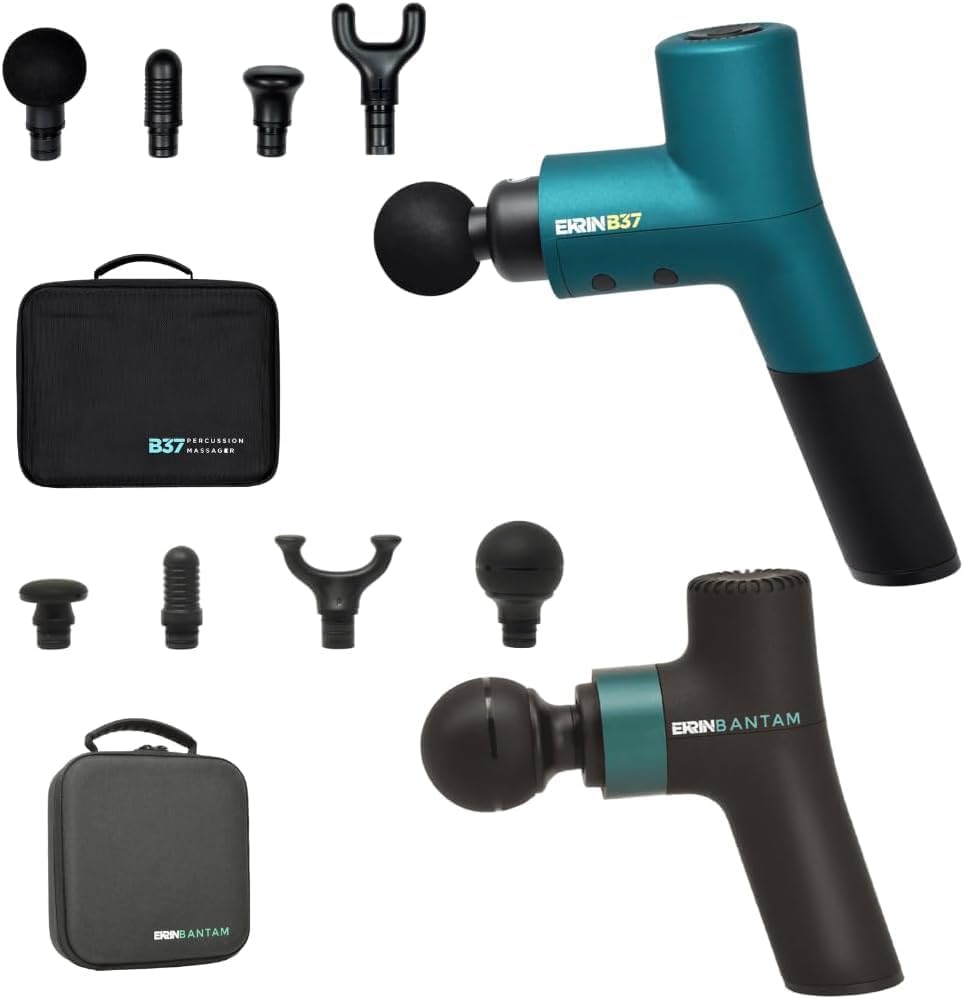
The 2nd gen Mini drops about 30% of the weight of the original and adds a redesigned QX35 brushless motor that runs quieter under load — meaningful when you're working a knotted calf at 6 a.m. before a track session. For runners, three specs matter more than marketing copy: stall force, amplitude, and battery life. Stall force determines whether the head keeps pumping when you lean into a fibrotic spot in the medial gastrocnemius; amplitude controls how deep each pulse travels; battery life dictates whether you can cover both legs plus glutes after a long run without recharging mid-session.
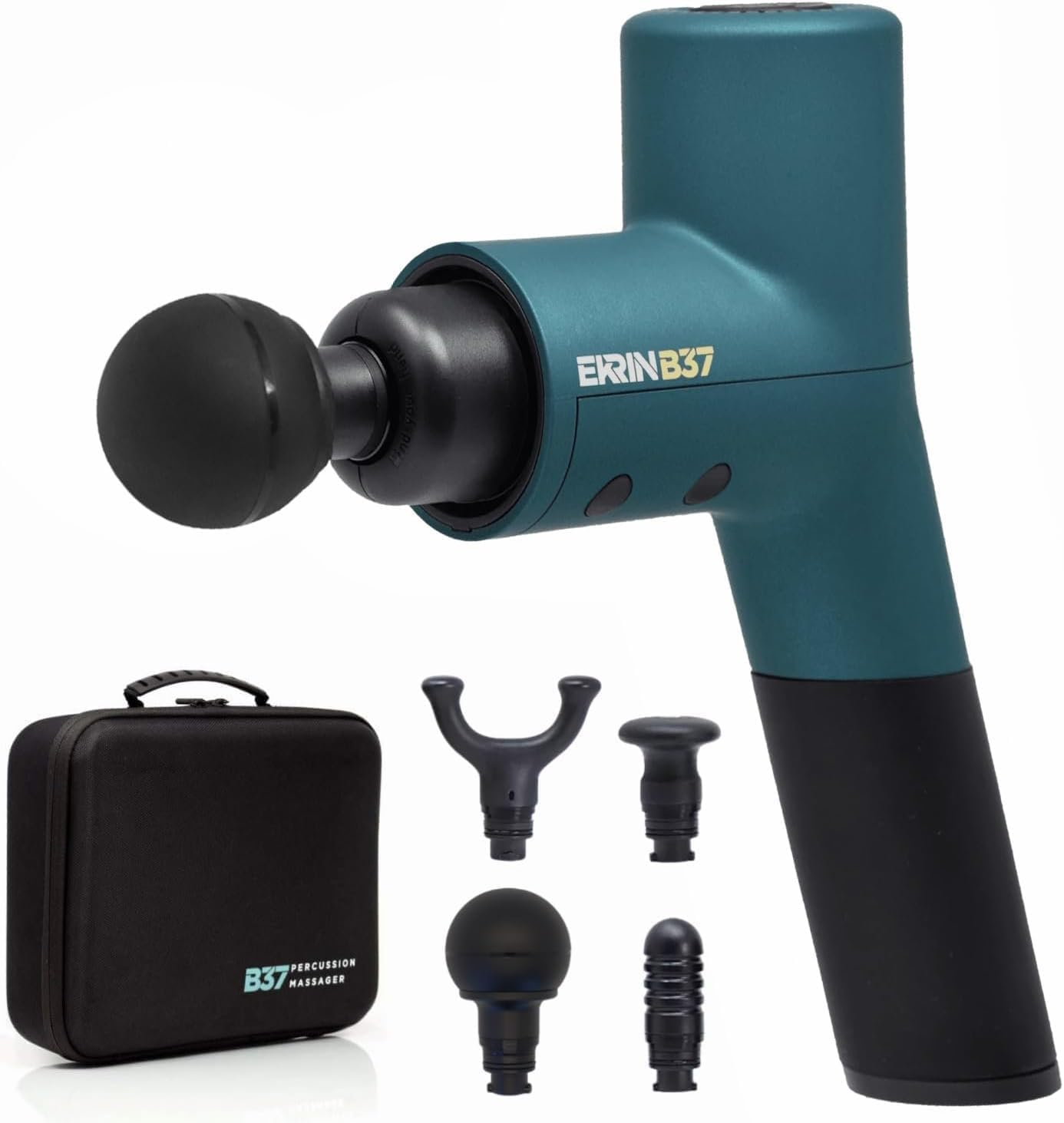
At 20 lbs of stall force, the Mini sits between an entry-level vibration tool and a full-size Theragun Pro. That's the sweet spot for self-treatment on calves and the lateral hip — full-size guns are overkill for IT band work and can drive painful pressure into the iliotibial tract itself, which you should never percuss directly. The Mini's 12mm amplitude is shallower than the Pro's 16mm but still penetrates the gastroc-soleus complex; for most recreational and sub-elite runners, that's the right ceiling.
Tight Calves: Soleus, Gastrocnemius, and the Achilles Chain
Calf tightness in runners almost always involves a stack of three structures: the gastrocnemius (the visible bulge), the soleus (the deeper, slower-twitch muscle running under it), and the Achilles tendon. The Mini handles the first two well; you should not jackhammer the Achilles itself.
The protocol that works for most runners: seated with the calf relaxed, set the Mini to speed 1 (1750 PPM) and float — not push — the standard ball attachment along the medial and lateral heads of the gastrocnemius for 60 to 90 seconds per side. Then drop the angle so the head reaches under the gastroc into the soleus and work for another 60 seconds. Move slowly, roughly an inch per second, and let the percussion do the work. If you hit a hot spot, hold steady for 10 to 15 seconds rather than grinding back and forth.
For the deeper soleus knots that build up during marathon training, percussive therapy alone often isn't enough. That's where a dense foam roller earns its place — sustained pressure plus active dorsiflexion (toes pulled toward your shin while rolling) lengthens the soleus in a way a 12mm-amplitude tool cannot replicate.
The IT Band Problem (And Why You Shouldn't Hammer It Directly)
The iliotibial band itself is a passive band of fascia — it doesn't relax under percussion because there's nothing contractile to relax. What you're actually treating when you "release the IT band" is the tensor fasciae latae (TFL) at the hip, the vastus lateralis on the outer quad, and the glute medius. The Mini shines here because those muscles are smaller and respond well to its lower amplitude.
Use the Mini on the TFL — that golf-ball-sized muscle just below the front of your hip bone — at speed 2 for 60 seconds. Then sweep down the vastus lateralis along the outer thigh, avoiding the IT band's tendinous midsection. Finish with the glute medius on the side of the hip. This sequence addresses the muscles that pull the IT band tight, which is what actually fixes ITBS-related knee pain. For a deeper look at common mistakes, see our breakdown of foam rolling IT band mistakes runners make.
Direct IT band foam rolling has been controversial since 2015 research showed it doesn't lengthen the band, but the bigger issue is that aggressive rolling on already-inflamed tissue makes ITBS worse. A multi-density roller that lets you choose pressure works better than a brick-hard cylinder when the lateral knee is irritated.
Why You Still Need a Foam Roller
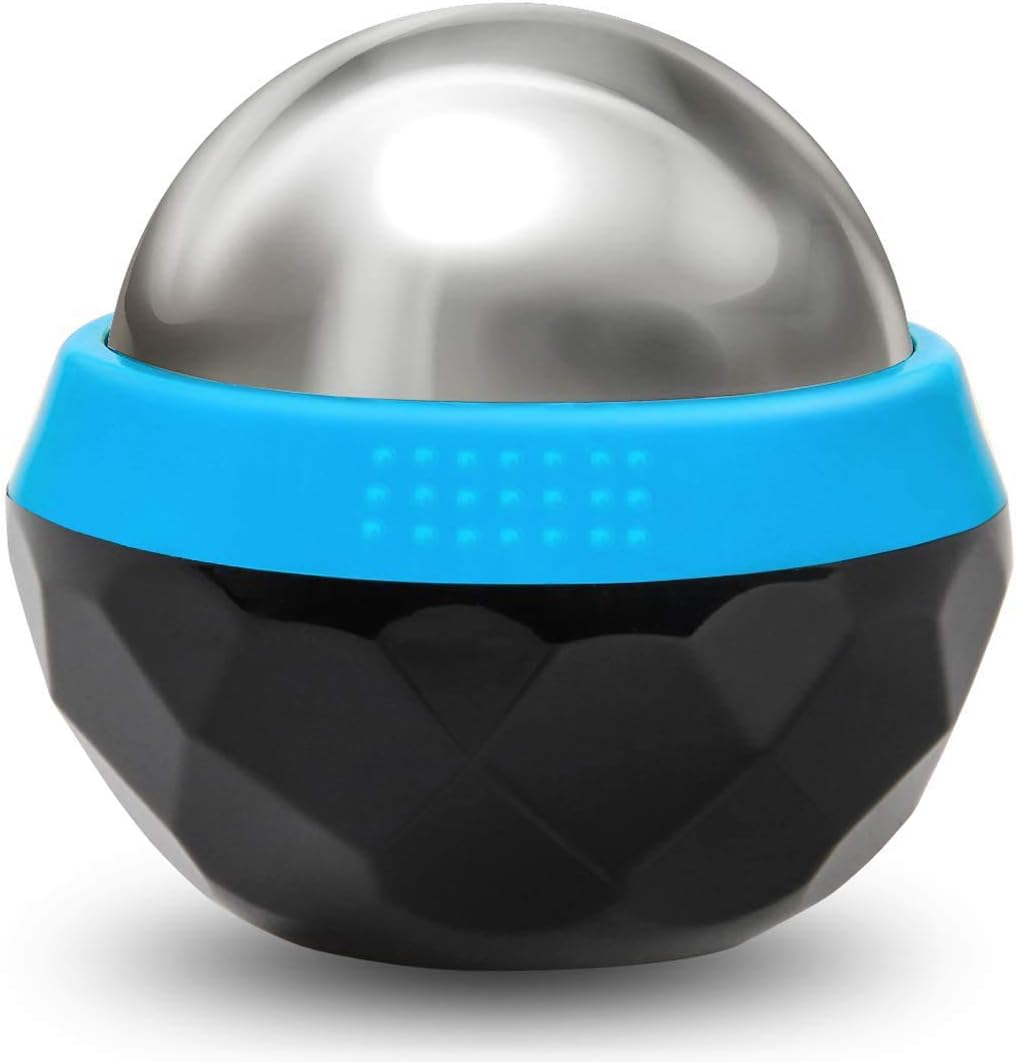
A massage gun and a foam roller don't compete — they fill different roles in a recovery stack. The Mini delivers focused, high-frequency input to a small footprint. A foam roller delivers broad, sustained pressure across a larger area and lets you use bodyweight to dial intensity. For runners, the combo solves problems neither tool handles alone: the Mini chases down trigger points after the roller has warmed the tissue, and the roller covers ground (thoracic spine, glutes, quads, hamstrings) that would take 20 minutes with a handheld device.
If you're choosing your first roller to pair with the theragun mini for runners tight calves protocol, the decision comes down to density, length, and whether you want vibration built in. Here's how the realistic options stack up.
Comparison: Foam Rollers That Pair Well With the Theragun Mini
| Roller | Length | Density | Best Use | Vibration |
|---|---|---|---|---|
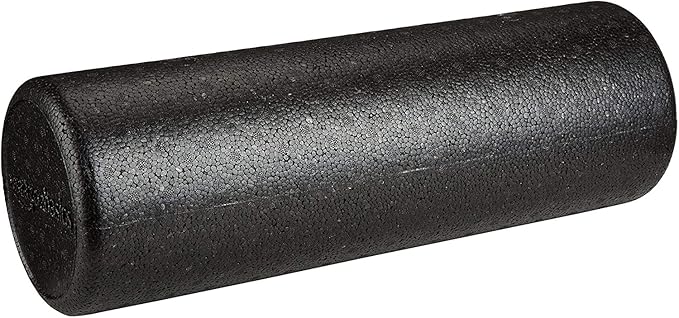
| Amazon Basics High-Density 18" | 18" | Firm | Calves, quads, glutes | No |
| FITINDEX Vibrating Roller | 13" | Medium-firm | Pre-run warm-up, deep soleus | 5 speeds |
| Krightlink 5-in-1 Set | Travel set | Variable | Race trips, full-body kit | No |
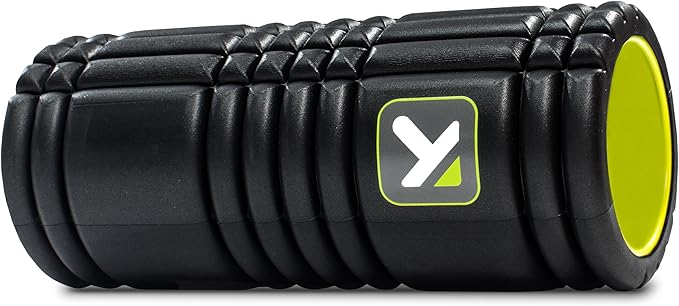
| TriggerPoint Grid 1.0 | 13" | Multi-density | Sensitive IT band area | No |
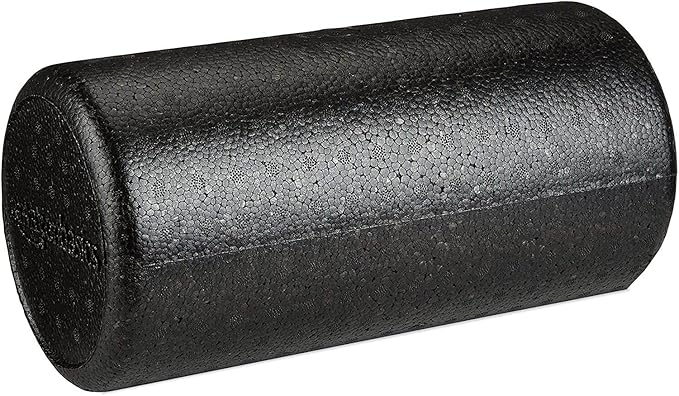
| Amazon Basics Round HD | 12-36" | Firm | Budget all-purpose | No |
Our Foam Roller Picks for Runners Using the Theragun Mini
Best Overall Pairing: TriggerPoint Grid 1.0 (13-inch)
If you only buy one roller to pair with the Mini, this is it. The hollow core wrapped in a multi-density EVA surface gives you firm pressure on the raised "fingertips" and softer relief on the channels between them — perfect for the irritated lateral thigh tissue around an angry IT band. At 13 inches it's portable enough to live in a gym bag and stable enough for thoracic spine extension work after long runs. The Grid pattern mimics finger and palm pressure rather than blunt cylindrical force, which is what makes it tolerable on day-after-race soreness. Check the TriggerPoint Grid 1.0 on Amazon
Best for Warm-Up: FITINDEX Vibrating Foam Roller
Vibration adds neurological priming that static rolling doesn't — useful before a workout when you need the soleus to wake up without grinding fascia. FITINDEX runs five speeds and is FSA/HSA eligible, which matters if you have leftover funds at the end of your benefits year. The vibration intensity is genuinely strong on speed 5, possibly too strong for some users on bony areas, but it's the only roller in this lineup that actively complements the Mini by reaching the deep soleus knots a 12mm amplitude can't fully resolve. Check the FITINDEX Vibrating Roller on Amazon
Best Budget: Amazon Basics High-Density Foam Roller, 18-inch
The 18-inch length matters more than runners assume — it spans both calves at once, both quads in a hip-flexor stretch, and the full thoracic spine. At its price, this roller has no business being as durable as it is. The molded polypropylene doesn't compress over time the way cheaper EPP rollers do, which means the pressure you feel six months in is the pressure you felt out of the box. No grid, no frills, just a dense cylinder that pairs cleanly with focused Mini work. Check the Amazon Basics 18-inch Roller on Amazon
Best for Travel: Krightlink 5-in-1 Foam Roller Set
If you race out of town or train at multiple gyms, a single 18-inch roller is a pain. The Krightlink set bundles a hollow roller with a massage stick, spiky ball, peanut ball, and stretch strap — all the auxiliary tools a marathon block actually needs. The roller itself is shorter and lighter than a dedicated dense roller, so don't expect it to replace the TriggerPoint for daily use; treat it as the travel kit you throw in a checked bag for a destination race. Check the Krightlink 5-in-1 Set on Amazon
Honorable Mention: Amazon Basics High-Density Round Roller
The round-profile version of the Amazon Basics roller comes in lengths from 12 to 36 inches. The 36-inch model is the cheapest way to get a roller long enough for thoracic spine mobility drills, which matter for runners more than most realize — restricted T-spine extension reduces stride efficiency. Buy this if you specifically want the long length. Check the Amazon Basics Round Roller on Amazon
Post-Run Recovery Protocol: Mini Plus Roller Stack
Here's the 12-minute sequence that consistently keeps runner calves and IT band issues at bay during peak training. Start with the foam roller while your tissues are still warm: 60 seconds per calf, 60 seconds per quad, 60 seconds per glute, focused on the TFL and glute medius rather than direct IT band pressure. Spend an extra 30 seconds on any pinpoint hot spots.
Then switch to the Mini. Speed 1 on the gastroc and soleus for 90 seconds per side. Speed 2 on the TFL, vastus lateralis, and glute medius for 60 seconds each. Speed 1 on the peroneals (the thin muscles on the outside of the shin) for 30 seconds — these get overlooked and contribute to IT band tightness. Finish with two minutes of active dorsiflexion stretching against a wall. For deeper calf-specific protocols, see our guide on soleus tightness in long-distance runners.
When the Theragun Mini Isn't Enough
The Mini's 20-lb stall force handles most calf and hip work, but it has a ceiling. Heavier runners (over 200 lbs), ultra-marathoners building up to 70-plus mile weeks, or anyone with a history of compartment syndrome will eventually want a full-size Theragun Pro or a comparable tool with higher stall force and 16mm amplitude. Similarly, if you're managing acute ITBS rather than chronic tightness, percussion is a complement to — not a replacement for — strength work on the glute medius, gait analysis, and load management. For a side-by-side of the different Theragun tiers, see our breakdown of which Theragun fits which runner. For most readers searching theragun mini for runners tight calves, though, the Mini plus a good roller is the right stop.
Frequently Asked Questions
Is the Theragun Mini 2nd gen powerful enough for marathon runners?
For recreational and sub-3:30 marathoners, yes — 20 lbs of stall force handles the calf and hip work most training blocks demand. For elite or heavy runners doing 70-plus mile weeks, the Mini may bog down on the densest soleus knots; consider the Elite or Pro for those cases. Either way, pair it with a foam roller for sustained pressure work.
Can I use the Theragun Mini on my IT band directly?
No — and you shouldn't with any percussive tool. The IT band itself is fascia and doesn't relax under percussion. Instead, work the muscles that tension it: the TFL at the front of the hip, the vastus lateralis on the outer quad, and the glute medius. Treating those three areas resolves most IT-band-related knee pain in runners.
How often should runners use the Theragun Mini on tight calves?
Daily is fine for 60 to 90 seconds per calf at speed 1. The risk is over-aggressive use — staying on one trigger point too long or using the highest speed on already-inflamed tissue can cause micro-bruising that delays recovery. If calves feel worse the next day, you used too much pressure, not too little.
Should I use the Theragun Mini before or after running?
Both, with different intent. Before: 30 to 60 seconds at speed 1 to wake up the calves and glute medius, short bursts, not deep work. After: 60 to 90 seconds per area at speed 1 or 2 for actual recovery, ideally within 30 minutes of finishing. Deep, slow work belongs in the post-run slot when tissues are warm but adrenaline has dropped.
Theragun Mini 2nd gen vs Hypervolt Go 2 for runners — which is better?
The Mini has higher stall force (20 lbs vs roughly 10 lbs) and longer battery life, while the Hypervolt Go 2 is lighter and slightly quieter. For runners specifically dealing with dense calf knots and IT band syndrome, the Mini's stall force is the more important spec — it keeps pumping when you lean in. For light pre-run priming on smaller muscles, the Go 2 is fine.
Is a vibrating foam roller worth it if I already have the Theragun Mini?
Yes, for one specific reason: the foam roller covers larger surface area and uses bodyweight, while the Mini delivers focused percussion. A vibrating roller bridges the two — broad pressure with neurological priming. If you only have budget for one tool, get the Mini; if you have both and want maximum benefit, the FITINDEX is the strongest pairing.
What's the difference between the Theragun Mini 1st gen and 2nd gen?
The 2nd gen is roughly 20 to 30% smaller and lighter, runs the redesigned QX35 motor (quieter, smoother under load), and has a refined grip. Core specs — 20 lb stall force, 12mm amplitude, three speeds — are similar. If you already own the 1st gen and it works, there's no urgent reason to upgrade. If you're buying fresh in 2026, the 2nd gen is the obvious choice.
Key Takeaways
- Choosing the right theragun mini for runners tight calves means matching capacity and output ports to your actual devices
- Always check actual watt-hours (Wh), not just watts — runtime depends on Wh, not peak output
- Also covers: theragun mini calf recovery
- Also covers: theragun mini IT band runners
- Also covers: mini massage gun runner calves
- Compare price-per-Wh across models to find the best value for your budget