If you've just been cleared by your pelvic floor physical therapist and you're easing back into running miles, the right foam roller for postpartum runners can shorten your recovery window without sabotaging the deep core work you just paid hundreds of dollars to rebuild. The short answer: choose a medium-density, smooth-surfaced roller (like the Amazon Basics High-Density Foam Roller, 18 inch) for ribcage expansion and lateral hip work, and add a textured roller (the TriggerPoint Grid 1.0) only for quads, calves, and glutes once your diastasis has closed to under two fingers. Skip aggressive deep-tissue rollers on your abdomen entirely.
Below, we walk through the five rollers worth considering in 2026 for the returning postpartum runner, what your pelvic floor PT actually means when they say "gentle myofascial release," and which body parts you should still avoid rolling for the first 12 weeks back.
Why postpartum runners need a different foam roller
A foam roller for postpartum runners has to do two contradictory jobs. It needs to be firm enough to release the hip flexors, IT band, and thoracic spine that get locked up from months of feeding, carrying, and stroller-pushing. But it also needs to be gentle enough that you can use it without bearing down, holding your breath, or putting pressure through a linea alba that is still knitting itself back together.

Pelvic floor PTs almost universally recommend three things when clearing you to roll again:
- Exhale on pressure. Never hold your breath against the roller — it spikes intra-abdominal pressure and can re-strain a healing pelvic floor.
- Avoid the lower abdomen and pubic bone entirely. No prone rolling across the front of your hips for the first 8-12 weeks back to running.
- Start with the ribcage and thoracic spine. Restoring rib mobility is what allows your diaphragm and pelvic floor to coordinate again.
That's why the best foam roller for postpartum runners is usually not the densest, knobbiest one on the market. You want versatility and the ability to dial intensity down, not up.
Comparison: top 5 foam rollers for the postpartum return-to-run phase
| Roller | Density | Surface | Best for postpartum use | Length |
|---|---|---|---|---|
| Amazon Basics High-Density 18" | Firm but smooth | Smooth EPP | Ribcage, thoracic spine, lats | 18 in |
| TriggerPoint Grid 1.0 | Multi-density | Textured grid | Quads, calves, glutes (week 6+) | 13 in |
| FITINDEX Vibrating 5-Speed | Medium | Lightly textured | Low-pressure release, FSA eligible | 13 in |
| Krightlink 5-in-1 Set | Varied | Mixed | Travel, full toolkit, peanut for SI joint | Set |
| Amazon Basics Round (shorter) | Firm | Smooth | Targeted hip and calf work | 12/18 in |
The 5 best foam rollers for postpartum runners in 2026
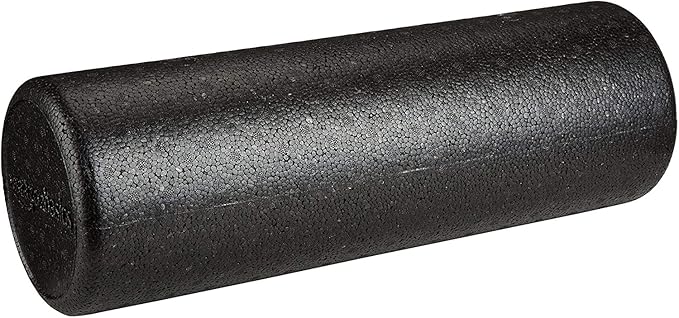
1. Amazon Basics High-Density Foam Roller, 18 inch — best overall starter
For most runners returning from pelvic floor PT, this is the roller to buy first. The 18-inch length is long enough to lie across lengthwise with your head and tailbone fully supported, which is exactly the position your PT will recommend for ribcage opening and 90/90 breathing drills. The smooth, firm surface releases the lats and thoracic spine without the painful poke of textured rollers — important when you're still tender across the upper back from nursing posture. It's also cheap enough that you won't feel guilty replacing it in a year. Check current price on Amazon.

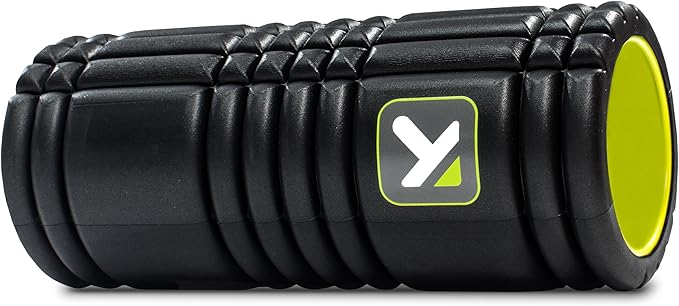
2. TriggerPoint Grid 1.0, 13-inch Multi-Density — best for quads and IT band
Once you're 6-8 weeks back into running and your PT has cleared more aggressive soft-tissue work, the TriggerPoint Grid is the gold standard for working through tight quads, calves, and the lateral hip. The hollow core construction means it stays firm through years of use, and the multi-density surface lets you choose between flat-zone gentle pressure and finger-zone deeper release just by rotating the roller. Postpartum runners often find their quads are doing way too much of the work their glutes used to do — this is the tool to address that. View on Amazon.
3. FITINDEX Vibrating Foam Roller, 5-Speed — best for nervous-system sensitivity (FSA/HSA eligible)
Many postpartum runners describe their tissue as feeling "reactive" or "guarded" for months after birth — even gentle pressure can feel like too much. Vibration changes that by down-regulating the nervous system before any deep work happens. The five speeds let you start at level one for ribcage and glute work, then ramp up only if and when your body welcomes more input. Because it's FSA/HSA eligible, you can often expense it against your healthcare account, which matters when you've just spent your budget on PT copays. See on Amazon.
4. Krightlink 5-in-1 Foam Roller Set — best toolkit for stroller-running parents
This set includes a hollow roller that nests smaller tools inside: a peanut ball (excellent for SI joint and parathoracic release), a spiky ball, a stretch strap, and a figure-8 band. For a postpartum runner who's traveling, doing daycare drop-offs, or sneaking recovery into 10-minute windows, the all-in-one storage is genuinely useful. The peanut ball in particular is what most pelvic floor PTs reach for when they want to release the SI joint without putting any pressure on the sacrum itself. Check the set on Amazon.
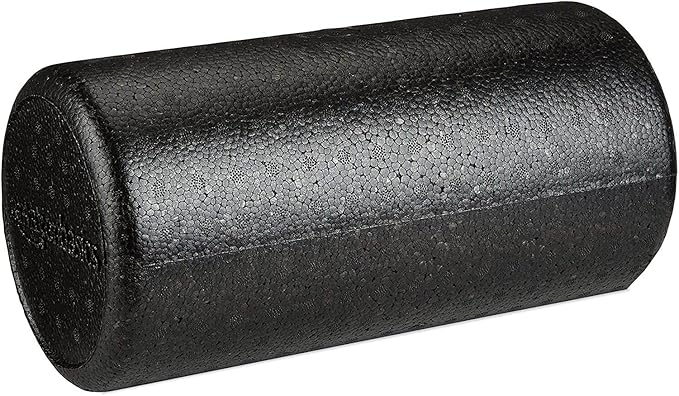
5. Amazon Basics High-Density Round Foam Roller — best budget short option
If you already own an 18-inch roller, a shorter round roller is the workhorse for targeted single-leg work: one calf at a time, one quad at a time, one glute at a time. That asymmetric work matters because most postpartum runners come back with a strength imbalance between sides — usually the side they carried baby on. Working one leg at a time on a shorter roller lets you actually feel the difference and even it out before it becomes a knee or hip injury. See on Amazon.
How to actually use a foam roller for postpartum runners
Buying the right roller is only half the equation. The protocol matters more. Here's what most pelvic floor PTs prescribe in the first 12 weeks of return-to-run:
Weeks 1-4 back to running: Roller used only as a positioning prop. Lie lengthwise on the 18-inch roller with knees bent, feet flat, and practice 90/90 diaphragmatic breathing for 5 minutes. No rolling motion at all. This restores rib mobility and helps the pelvic floor coordinate with the diaphragm.
Weeks 4-8: Gentle thoracic spine rolling (upper back only, T4-T8), lat release on the side, and glute medius work seated on the roller. Still no abdominal or front-hip rolling.
Weeks 8-12: Add quad, calf, and adductor work with the textured TriggerPoint roller. Hip flexor release using a softer tool only if your PT confirms diastasis has closed below two fingers and there's no doming under load.
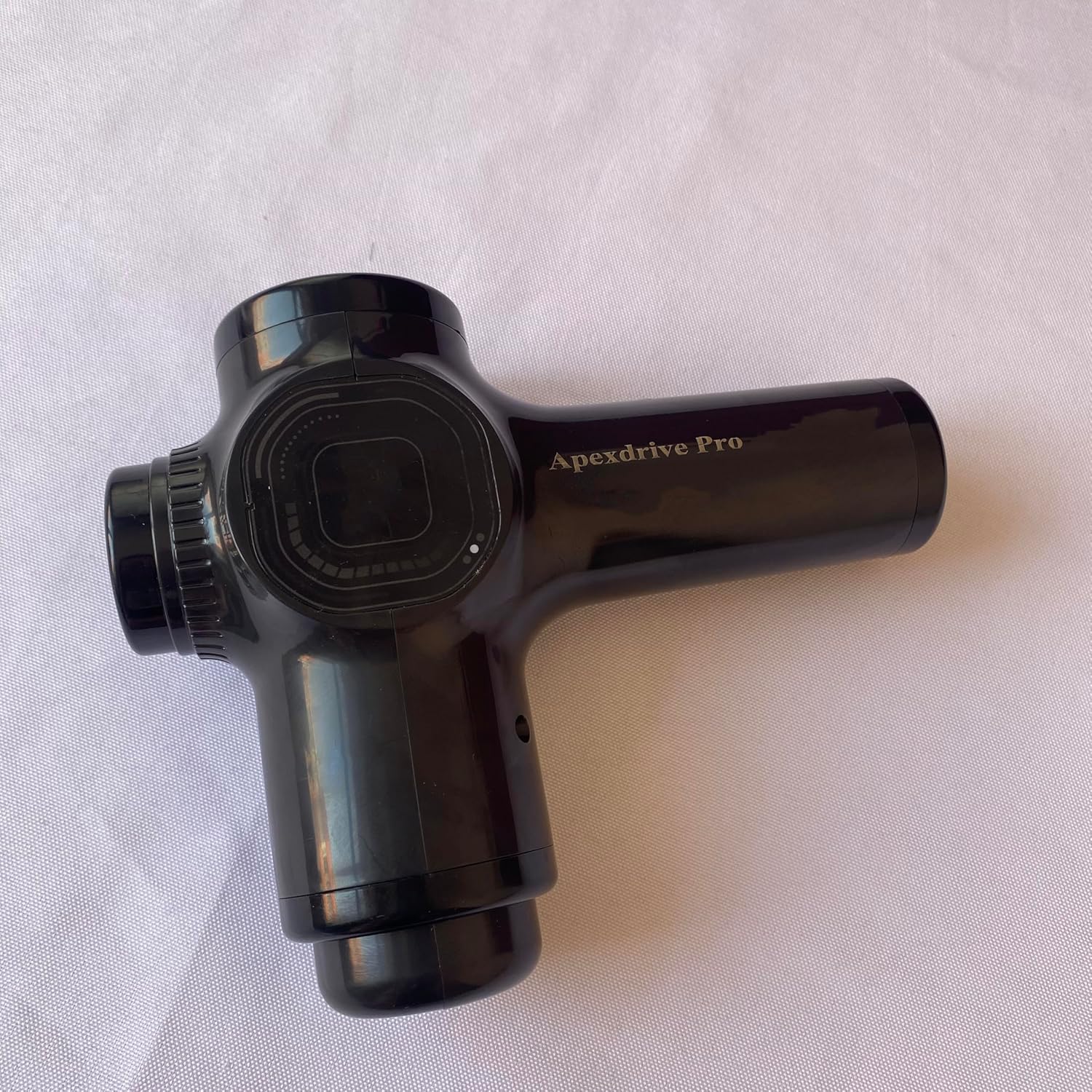
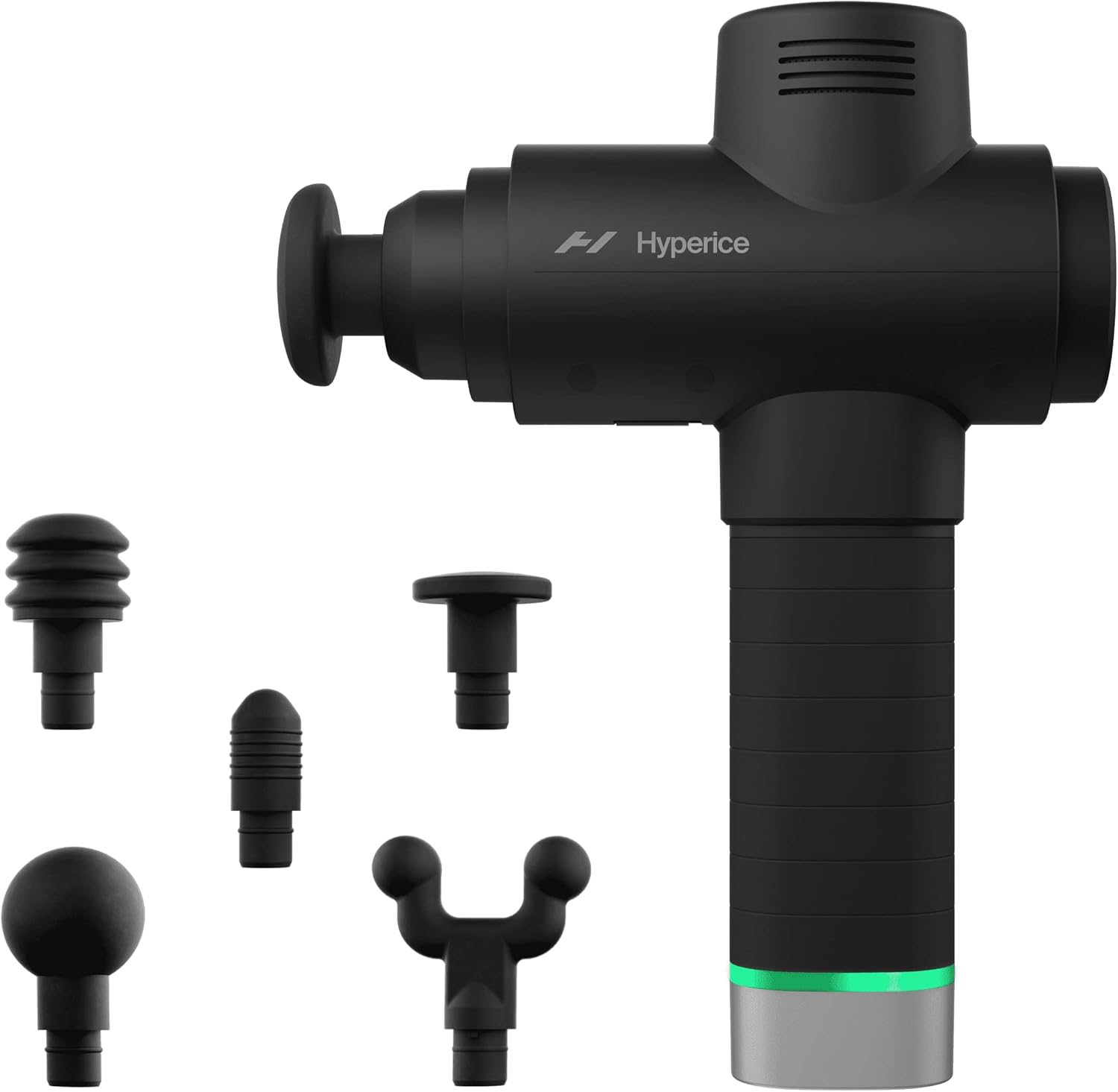
For more on building a complete recovery routine, see our guides to recovery tools for marathon training and massage guns for postpartum recovery.
What to avoid when choosing a foam roller for postpartum runners
Three product categories that get marketed to runners but are wrong for the postpartum phase:
- Ultra-firm deep-tissue rollers with large knobs. These are designed for already-conditioned athletes and will make a guarded postpartum nervous system more guarded, not less.
- Extra-long rollers used across the abdomen. Any rolling motion across the linea alba is a hard no in the first six months.
- Heated rollers. Heat plus pressure plus a still-shifting hormonal environment can trigger surprising vasovagal responses, especially in nursing parents.
For complementary work on the calves and feet (which take a beating from carrying babies in arms), check our breakdown of lacrosse balls versus spiky balls for plantar fascia.
Frequently Asked Questions
How soon after pelvic floor PT discharge can I start foam rolling for running recovery?
Most pelvic floor PTs clear gentle thoracic rolling and lengthwise positioning immediately at discharge, but defer deep-tissue work on quads, IT band, and hip flexors until you've completed at least 4-6 weeks of consistent return-to-run without any leaking, heaviness, or doming. Always confirm with your specific PT — discharge criteria vary widely.
Can I use a foam roller on my abdomen if I had a C-section?
No, not in the first six months, and only with explicit PT clearance after that. The scar tissue from a C-section needs specific manual mobilization techniques — not the broad shear force of a foam roller. Ask your PT about scar massage protocols instead, which use fingertip pressure and skin-on-skin contact.
Is a vibrating foam roller safe for nursing or pumping parents?
Yes, vibrating rollers are safe to use on the back, quads, calves, and glutes during nursing and pumping. Avoid using vibration directly on breast tissue or over the lower abdomen. Many users find low-speed vibration on the upper back and lats actually helps with the chest tightness that comes from nursing posture.
What size foam roller is best if I'm short on storage space?
A 13-inch roller covers 90% of postpartum recovery needs and fits under a crib or in a closet corner. The TriggerPoint Grid 1.0 at 13 inches is the most space-efficient option that still works for thoracic spine rolling when used diagonally. The 18-inch length is only critical if you specifically want full-spine breathing drills.
Should I get a foam roller or a massage gun as my first recovery tool postpartum?
Start with a foam roller. It's slower, harder to overuse, and the lengthwise positioning supports the breathing and ribcage work that's foundational to pelvic floor recovery. A massage gun is a great second tool around month 4-6 for targeted calf and glute work, but it's not the right first purchase for someone fresh out of PT.
How do I know if I'm rolling too aggressively for my postpartum body?
Three warning signs: you're holding your breath against the pressure, you feel any bearing-down sensation in your pelvic floor, or you see your abdomen dome or cone outward as you change positions. Any of these means back off, shorten the session, and lower the intensity. Rolling should feel like an exhale, not a brace.
Are budget foam rollers as good as premium ones for postpartum recovery?
For postpartum recovery specifically, yes — and arguably better. The premium textured rollers are designed for harder, deeper work than your healing tissue should be receiving. A simple firm-but-smooth roller in the $15-25 range is genuinely the right tool for the first six months back to running.
Final pick for the postpartum runner
If you're buying just one foam roller for postpartum runners, get the Amazon Basics 18-inch high-density roller first. Add the TriggerPoint Grid 1.0 around week 8 when your tissue is ready for textured input. That two-roller setup will carry you through the first year of returning to running without overdoing it on a body that's still recalibrating.
Key Takeaways
- Choosing the right foam roller for postpartum runners means matching capacity and output ports to your actual devices
- Always check actual watt-hours (Wh), not just watts — runtime depends on Wh, not peak output
- Also covers: foam roller after pelvic floor therapy
- Also covers: postpartum return to running roller
- Also covers: best foam roller for new moms running
- Compare price-per-Wh across models to find the best value for your budget